



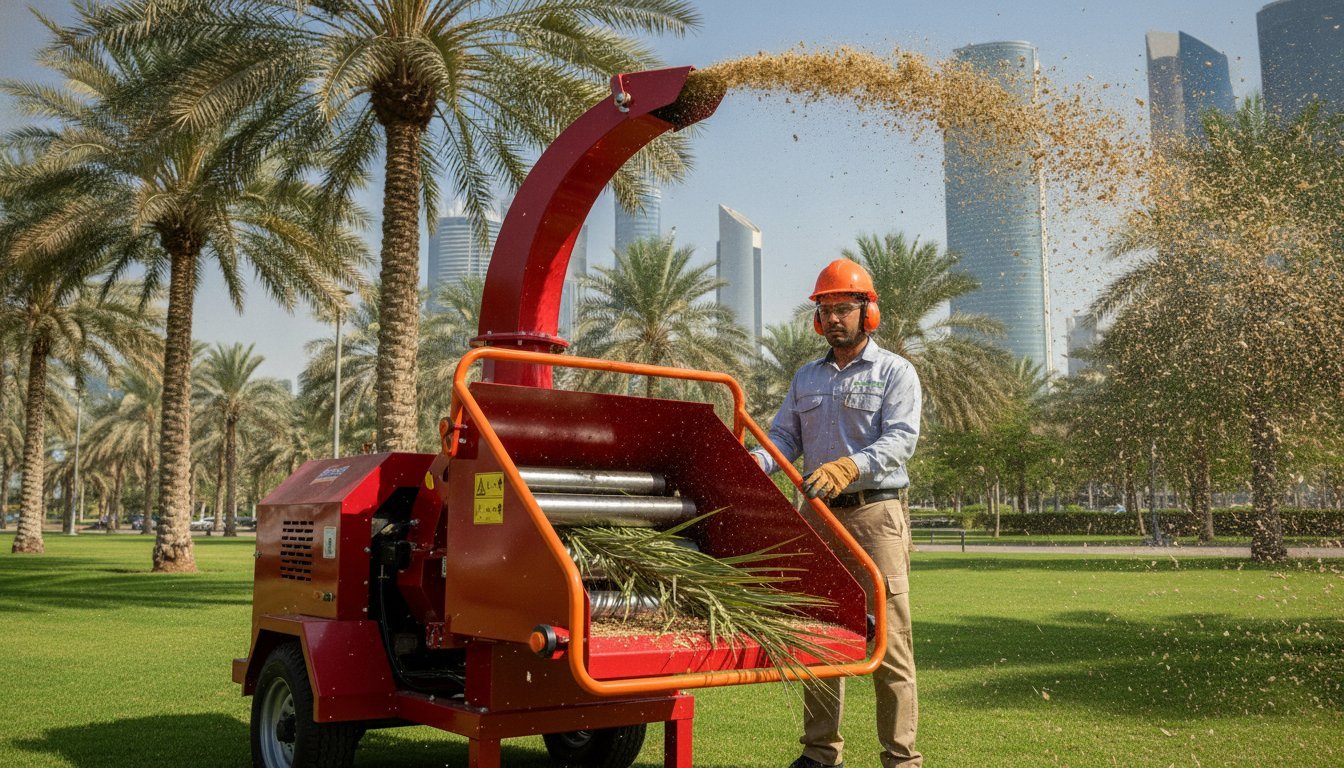
Did you know the UAE generates approximately 500,000 tons of palm waste every year, yet most standard machines fail to process it without seizing? Palm tree waste isn’t wood; it’s a dense collection of tough, stringy fibres that can easily destroy low-spec equipment. If you’ve struggled with fronds wrapping around rotors or constant downtime during peak summer months, you aren’t alone. Finding a specialized wood chipper for palm trees UAE operators can rely on is the first step toward efficient waste management.
We understand the frustration of bulky waste piling up while your machinery sits idle for repairs. It’s time to stop treating palm fronds like standard timber. This article provides the technical expertise you need to process fibrous waste using industrial-grade chippers. You’ll learn which high-torque specifications handle these unique materials and how to maintain your equipment’s longevity despite the UAE’s extreme heat. We’ll explore the operational steps to reduce your waste volume efficiently and avoid the AED 100 per tonne landfill fees currently enforced across the UAE.
Key Takeaways
- Understand why palm fibres differ from standard wood and how they cause the destructive wrap-around effect on standard rotors.
- Identify essential hardware specs, such as aggressive hydraulic feed rollers, required for a wood chipper for palm trees UAE operations.
- Learn how high silica levels in palm fronds impact blade longevity and why precise anvil adjustments are mandatory for clean cuts.
- Master the butt-end first feeding technique and moisture pre-sorting to ensure smooth intake and reduce machine downtime.
- Evaluate industrial-grade equipment like the Timberwolf TW 280TDHB or Bandit Intimidator 15XPC for high-volume landscape management.
The Unique Challenge of Palm Tree Waste in the UAE
Palm trees are botanically closer to grasses than to the oaks or pines found in temperate climates. This distinction is critical for landscape contractors and facility managers. While hardwoods possess a rigid lignin structure that shatters upon impact, palm fronds consist of dense, stringy vascular bundles. These fibres possess immense tensile strength. When processed through a standard machine, they don’t break into clean chips. Instead, they tear into long, rope-like strands that quickly compromise internal components. This biological makeup is why a standard machine often fails where a specialized wood chipper for palm trees UAE operators use succeeds.
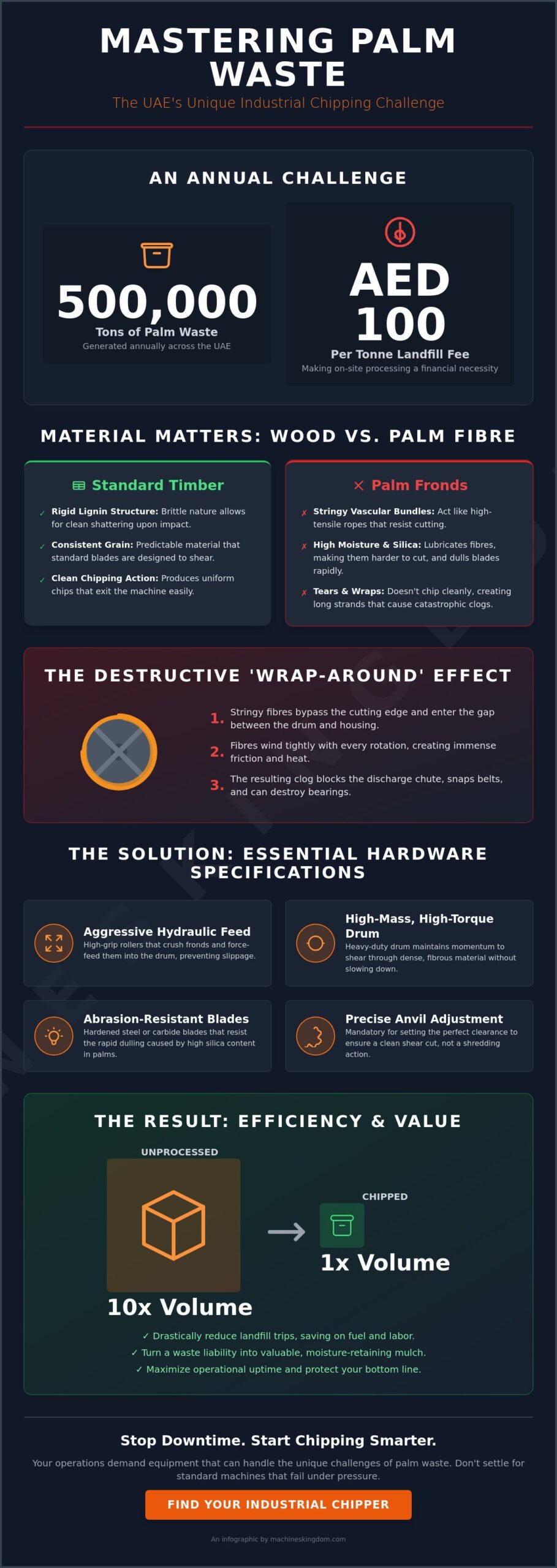
The scale of this challenge is massive. The UAE produces approximately 500,000 tons of palm waste every year. Managing this volume requires equipment that can handle the specific density of date palm trimmings without constant mechanical failure. Choosing to chip on-site rather than hauling bulky waste to a landfill is no longer just an environmental preference; it’s a financial necessity. With Dubai landfill gate fees for general waste currently at AED 100 per tonne under Law No. (18) of 2024, volume reduction is the only way to protect your operational margins.
Why Palm Fronds Clog Standard Garden Shredders
Fresh palm fronds carry high moisture levels that lubricate the fibres, making them even more difficult to cut. In a low-torque garden shredder, these damp fibres wrap around the rotor. This creates a strangle effect that overheats the motor and snaps drive belts. Professional chipping is fundamentally different from simple shredding. A heavy-duty Woodchipper uses high-mass drums and precise blade clearances to shear through the vascular bundles before they have a chance to wrap. Without this shearing action, the machine becomes a liability rather than an asset.
Economic Impact of Efficient Palm Waste Management
Efficiency drives profitability in UAE landscaping. Unprocessed palm fronds are incredibly bulky and difficult to stack, leading to inefficient transport. By chipping waste on-site, you reduce the total waste volume by a ratio of roughly 10:1. This significantly lowers the number of truck trips required for disposal and saves on fuel and labor costs. Don’t overlook the value of the end product. In the UAE’s sandy soil, processed palm mulch is a valuable resource. It helps retain moisture and stabilizes soil temperatures. Using a high-performance wood chipper for palm trees UAE allows you to turn a waste liability into a functional soil conditioner, supporting the region’s move toward a circular economy.
Why Standard Wood Chippers Fail with Palm Fibres
Standard wood chippers are engineered to process timber with a consistent grain. They rely on the brittle nature of wood to snap and shear the material into uniform pieces. Palm trees present a completely different mechanical problem. Because palm is a monocot, it lacks the concentric rings found in hardwoods. Instead, it features thousands of individual vascular bundles. These bundles act like high-strength cables. When a standard disc or drum chipper attempts to process these, the blades often fail to achieve a clean cut. Instead of chipping, the machine shreds the frond into long, resilient strings that quickly lead to mechanical failure.
The physics of the ‘wrap-around’ effect is the primary cause of downtime. In drum chippers, these long fibres don’t exit the discharge chute. They get caught in the gap between the drum and the housing, winding tighter with every rotation. This creates massive friction and heat. In the UAE’s high ambient temperatures, this extra heat can lead to premature bearing failure or scorched drive belts. Additionally, palm fronds contain high levels of silica. This mineral acts as an abrasive, dulling standard steel blades in a fraction of the time it takes to process Ghaf or Sidr trees. Using a specialized wood chipper for palm trees UAE is the only way to counteract this accelerated wear and tear.
The Anatomy of a Palm Frond Clog
The point of failure is almost always the gap between the anvil and the blade. If this clearance isn’t set perfectly, stringy fibres bypass the cutting edge entirely. They slip through the gap and begin to ‘bird-nest’ in the discharge chute. This creates a dense, tangled mass that blocks all outgoing material. Clearing these clogs is dangerous and time-consuming. Maintaining precise tolerances is essential for operational safety. You should consult a professional Tree Work Safety Guide to understand the risks involved when clearing debris from high-torque machinery.
Technical Specs: Torque vs. Horsepower
High horsepower is often a misleading metric for palm processing. You don’t need raw speed; you need torque. A high-horsepower machine with a light flywheel will stall the moment a dense palm heart hits the blades. True performance comes from the flywheel’s mass and the hydraulic system’s pressure. Aggressive hydraulic feed rollers with hardened steel teeth are mandatory. These rollers must grip the slippery, waxy surface of the frond and force it against the cutters without slipping. Modern ‘No-Stress’ auto-feed systems are also vital. They monitor the engine RPM and automatically pause the feed if the drum slows down, preventing the machine from choking on dense material. For those managing large-scale landscapes, selecting a high-performance wood chipper for palm trees UAE ensures that your equipment stays in the field rather than the repair shop.
Key Features to Look for in a Palm-Ready Wood Chipper
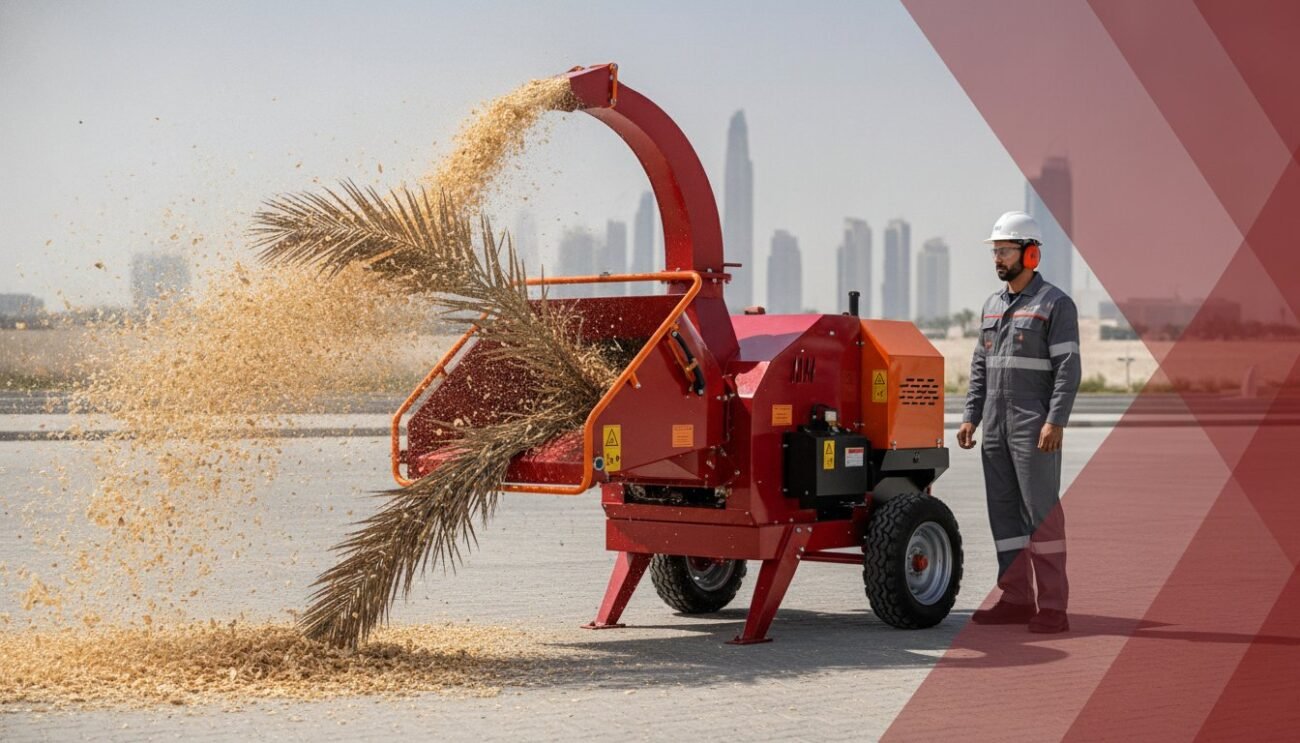
Selecting a wood chipper for palm trees UAE operations requires a shift from general landscaping specs to industrial-grade requirements. You can’t rely on machines designed for softwoods to handle the unique density of a date palm. Success in the field depends on specific mechanical features that prioritize material intake and forceful ejection. If your current equipment frequently chokes on stringy fibres, it’s likely missing these critical components. Before making a purchase decision, reviewing a detailed wood chipper UAE industrial comparison guide can help you evaluate the top models side by side against your specific operational requirements.
Heavy-duty hydraulic feed rollers are your first line of defence. Palm fronds have a waxy, slippery exterior that causes standard rollers to lose their grip. You need rollers equipped with aggressive, hardened steel teeth that bite deep into the material. This ensures a consistent feed rate and prevents the frond from vibrating against the blades without being pulled in. Precision is equally vital. An adjustable anvil allows you to maintain the tight blade-to-anvil clearance necessary to shear vascular bundles cleanly. Without this adjustment capability, you’ll inevitably face the bird-nesting issues previously discussed.
Fibrous blockages are the primary enemy of productivity. Oversized discharge chutes paired with high-velocity blowers are essential to eject material before it can tangle. Additionally, consider the environmental reality of the region. Given the UAE’s 45°C+ summer temperatures, robust cooling systems for both the engine and hydraulic oil are mandatory. Continuous operation in desert conditions will quickly overheat a machine designed for temperate climates, leading to expensive hydraulic seal failures and engine downtime.
Blade Material and Angle Considerations
Standard carbon steel blades won’t survive the high silica content found in UAE palms. You need blades forged from hardened steel alloys to maintain a sharp edge. Reversible blades provide a massive advantage for high-volume operations. They allow your crew to flip to a fresh cutting edge in the field, effectively doubling your uptime before a full sharpen is required. The optimal blade angle for palm is more aggressive than for hardwood, designed specifically to slice through tough fibres rather than smashing them.
The Advantage of Towable vs. Stationary Units
For large UAE plantations and scattered landscape projects, mobility is a major factor in labor efficiency. A road-towable wood chipper for palm trees UAE provides the flexibility to move between sites without the need for separate flatbed transport. These units are built on a heavy-duty chassis to maintain stability during high-torque processing. Integrated high-capacity fuel tanks are also a vital feature for remote field work. They ensure your crew stays productive for a full shift without the logistical headache of frequent refueling stops in remote desert locations.
Best Practices for Chipping Palm Trees Safely and Efficiently
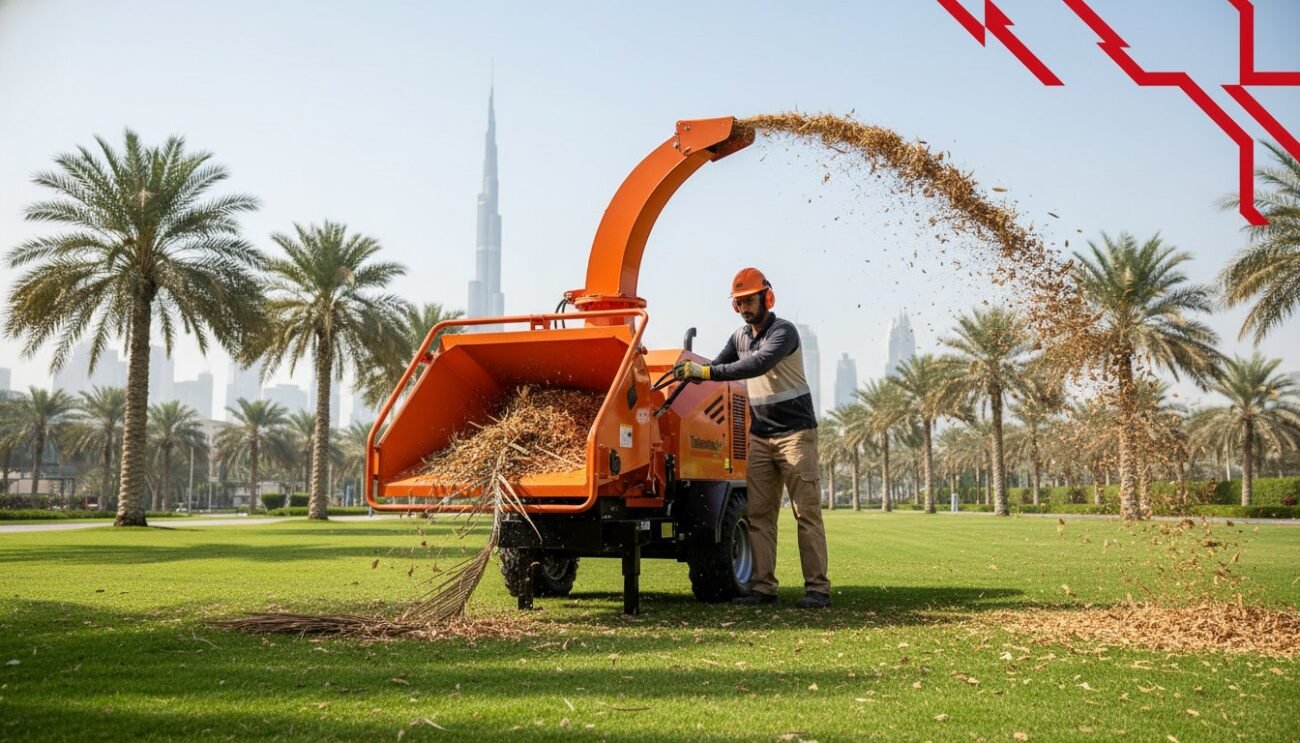
Operational success with a wood chipper for palm trees UAE depends as much on operator technique as it does on engine torque. You shouldn’t simply throw material into the hopper and expect consistent results. Start by pre-sorting your fronds. Freshly cut green fronds have higher moisture and flexibility, while older, dried fronds are more brittle and abrasive. Mixing these loads helps maintain a steady throughput and prevents the machine from struggling with a single material type. Staging your waste before starting the machine reduces idle time and saves on fuel costs.
Safety protocols must account for the unique hazards of palm. Standard work gloves often fail against the sharp, rigid thorns found at the base of many date palm species. Operators must wear puncture-resistant gloves and full-face shields. The high silica content in palm creates a fine, irritating dust during the chipping process. This isn’t just a nuisance; it’s a respiratory hazard that requires high-quality masks and strategic discharge management. Always position the discharge chute downwind. This prevents dust from accumulating around the operator or clogging the engine’s air intake system.
Step-by-Step Feeding Technique for Palm
Efficiency begins with the ‘butt-end first’ method. The flared base of the frond is the densest part. Feeding this end first allows the hydraulic rollers to grab the widest surface area immediately, ensuring a secure grip. If a base is excessively wide, take a moment to trim it with a chainsaw for a smoother entry. Don’t feed fronds one by one. Instead, overlap them slightly to maintain constant pressure on the feed rollers. This reduces the ‘kickback’ effect. If you hear the engine RPM drop, use the reverse function immediately to clear the throat before a full blockage occurs.
Equipment Maintenance in UAE Conditions
The desert environment is unforgiving on high-torque machinery. In the UAE, air filters can clog in a single shift due to the combination of airborne sand and fine palm dust. Check filters every four hours of operation. High ambient temperatures also thin out hydraulic fluid, which can lead to reduced feed roller pressure. Monitor your fluid levels and quality daily. Finally, use high-temp grease on all pivot points. Sand ingress is a constant threat to bearings and rollers. Regular purging of old grease is the only way to prevent premature wear and keep your wood chipper for palm trees UAE in peak condition.
Equip your landscape team with a professional wood chipper for palm trees UAE to ensure maximum site productivity and equipment longevity.
Industrial Solutions: Timberwolf and Bandit Wood Chippers
Mastering palm waste requires more than just technique; it requires hardware engineered for the task. At Machines Kingdom, we provide the technical expertise and industrial machinery necessary to turn a significant waste challenge into a streamlined operation. Selecting a wood chipper for palm trees UAE professionals can trust involves choosing between specialized disc and drum configurations. Each has distinct advantages depending on whether you are managing manicured urban gardens or massive date plantations in Al Ain.
We support UAE contractors with a comprehensive supply chain for genuine parts and on-ground technical support. Reliability in the desert heat is non-negotiable. Our team ensures your equipment remains operational through rigorous maintenance schedules and immediate access to hardened steel blades and hydraulic components. Whether you need a compact unit for city work or a powerhouse for agricultural clearing, our portfolio features the industry’s most resilient brands.
High-Efficiency Compact Chippers: The Efficiency Specialist
Our range of high-performance towable chippers is a premier choice for urban landscaping. These machines feature advanced feed systems that electronically manage material intake. This prevents engine stalling when processing dense palm hearts, a common issue discussed in previous sections. Their compact design and superior power-to-weight ratio make them ideal for navigating tight residential areas in Dubai or Abu Dhabi. If your priority is fast throughput and easy towability between multiple sites, these units deliver the reliability you need.
Heavy-Duty Drum Chipper Solutions: The Heavy-Duty Powerhouse
For extreme palm waste volumes and whole trunk processing, our industrial drum chipper machines are the definitive solution. These drum-style chippers provide the extreme torque required to process entire palm trees without hesitation. Their robust drum design is specifically resilient against the abrasive silica and stringy fibres that destroy lesser machines. They offer customizable options for large-scale agricultural projects, ensuring that even the most massive clearing tasks are completed efficiently. Their durability is unmatched when facing the toughest fibrous materials in the region.
Choosing the right wood chipper for palm trees UAE conditions depends on your specific waste volume and mobility needs. Drum chippers excel at large, inconsistent material, while disc chippers often provide a more uniform chip for mulching. Contact Machines Kingdom today to evaluate these industrial solutions. Our experts will help you select the precise machine configuration to optimize your workflow and eliminate the high costs of palm waste disposal.
Drive Efficiency in Your UAE Landscape Operations
Processing 500,000 tons of annual palm waste requires more than standard equipment. You’ve learned that the fibrous nature of palm necessitates high-torque machinery and precise blade maintenance to avoid the destructive wrap-around effect. By implementing the butt-end first feeding technique and adhering to strict maintenance schedules, you can significantly reduce machine downtime and eliminate high landfill fees. Investing in a specialized wood chipper for palm trees UAE is the most effective way to turn bulky waste into valuable mulch while protecting your operational margins.
As an authorized distributor, Machines Kingdom provides comprehensive technical support for industrial machinery across the UAE. We maintain a ready inventory of high-performance towable and stationary units to meet your specific project demands. Explore our range of Timberwolf and Bandit Wood Chippers at Machines Kingdom today to find the perfect solution for your site. Take control of your waste management and elevate your productivity with equipment built for the desert.
Frequently Asked Questions
Can I use a standard garden wood chipper for palm fronds in the UAE?
No, you shouldn’t use a standard garden chipper. These machines are designed for rigid timber and lack the torque required to process fibrous monocots. The stringy fibres will wrap around the rotor and stall the motor almost immediately. For successful processing, you need a specialized wood chipper for palm trees UAE operators use to handle high-tensile vegetation safely.
How often do I need to sharpen blades when chipping palm trees?
You should inspect and sharpen your blades daily when processing palm. The high silica content in UAE palm species acts like sandpaper on steel edges, dulling them faster than standard hardwood. Using dull blades increases the risk of clogs and puts unnecessary strain on the engine. Reversible blades provide a significant advantage by allowing you to switch to a fresh edge mid-shift.
What is the best wood chipper for large-scale palm plantations?
The Bandit Intimidator 15XPC is the most effective solution for large-scale plantations requiring whole-tree processing. It offers the extreme torque and drum mass needed for dense trunks. For high-volume frond management in urban or agricultural settings, the Timberwolf TW 280TDHB 8 provides an excellent balance of power and mobility for professional crews.
How do I prevent my wood chipper from clogging with stringy palm fibres?
Preventing clogs requires a combination of machine settings and feeding technique. Set your anvil-to-blade clearance to the manufacturer’s tightest recommended spec to ensure a clean shear. Always feed fronds butt-end first. This allows the hydraulic rollers to gain a secure grip on the densest part of the material, forcing it through the cutters without slipping.
Is it better to chip palm fronds when they are green or dry?
A balanced mix of green and dry fronds is the most efficient approach. Green fronds are flexible but can be slippery for the feed rollers; dry fronds are brittle but highly abrasive due to concentrated silica. Mixing the loads prevents the machine from overheating while maintaining a consistent throughput speed throughout the work day.
What safety gear is essential for palm tree chipping in the UAE?
Puncture-resistant gloves and full-face shields are mandatory to protect against rigid palm thorns and flying debris. You must also wear high-quality respiratory masks. The fine dust produced during chipping contains silica, which is a respiratory hazard. Proper PPE is vital during long shifts in the UAE heat to ensure operator safety.
Are towable wood chippers better than stationary ones for farm use?
Towable chippers are generally superior for farm use due to the vast distances between palm groves on UAE plantations. They allow you to process waste at the source rather than hauling bulky fronds to a central location. This mobility saves significant labor time and fuel costs associated with waste transport and disposal logistics.
Does Machines Kingdom provide technical support for Timberwolf and Bandit chippers?
Yes, Machines Kingdom provides full technical support and genuine spare parts as an authorized distributor. Our team offers expert guidance on machine selection and maintenance for a wood chipper for palm trees UAE across all seven emirates. We ensure your industrial equipment remains operational in the most demanding desert conditions through professional service and availability.


One thought on “Chipping Palm Trees: Best Practices for UAE Landscapes”